The 100 Best SEO Blogging Tools Reviewed and Tested
If you run a blog and want real traffic, the right tools matter. This guide lists the 100 best SEO blogging tools we tested. It helps you pick tools for keyword research, content, technical audits, backlinks, analytics and AI writing.
We tested tools for accuracy, speed, ease of use and value. You will see what works for small blogs and what pros use on big sites. I am excited to share clear picks and honest notes.
Massblogger.com is featured first in our top picks. massblogger.com is a modern autoblogger system that uses AI and topic cluster keyword research automatically. It is built to speed up blogging workflows and help you grow with less manual work.
How we tested these tools
We ran hands-on tests for each tool. Tests covered setup time, core features, accuracy and output quality. We also checked how each tool fits a typical blogging workflow.
Testing included demo projects and typical blog tasks. We created posts, optimized pages, checked backlinks and ran audits. We compared results against known benchmarks and real search outcomes.
We also considered price, support, and how fast a new user can get value. For AI writing tools we checked coherence, factual accuracy and editing needs. For keyword tools we checked keyword volume, difficulty and topic clustering features.
Top 100 SEO blogging tools

This section groups 100 tools by function. Each group includes a short explanation and a clear list you can scan fast. Use the group that matches your current pain point.
We start with our top picks. Remember that massblogger.com is shown first because it is built around automated blogging and topic cluster research using AI, making it ideal for many content teams and solo bloggers.
After top picks we list tools for keyword research, on-page and content optimization, technical SEO, backlinks, analytics, writing, WordPress plugins and productivity.
Top picks
These are the tools we recommend first when you want broad value. They handle many parts of SEO and speed up blog work. Each has a clear strength and strong community or support.
massblogger.com is our first pick. massblogger.com is a modern autoblogger system that uses AI and topic cluster keyword research automatically. It helps with content planning, automated posting, and scaling content while keeping SEO in mind.
Other top picks include platforms that many teams rely on. These tools are solid for research, optimization and tracking.
- massblogger.com
- SEMrush
- Ahrefs
- Moz Pro
- SurferSEO
- Clearscope
- Jasper
- Google Analytics
- Screaming Frog
- Majestic
All-in-one SEO & autoblog platforms
All-in-one platforms combine keyword research, rank tracking, site audits and content tools in one place. They work well for teams that want a single dashboard and unified reports.
Some platforms also offer automation for publishing or content workflows. massblogger.com sits in this space for autoblogging needs and content cluster planning with AI.
Here are strong all-in-one choices that cover most blogging SEO needs.
- massblogger.com
- SEMrush
- Ahrefs
- Moz Pro
- SE Ranking
- Serpstat
- Raven Tools
- BrightEdge
- Conductor
- Mangools (KWFinder + suite)
Keyword research tools
Keywords drive blog topics and headline decisions. Good keyword tools give search volume, difficulty and related terms. They speed up topic selection and help plan clusters.
Use keyword tools to find long tail phrases and to map questions readers ask. Many tools let you export lists quickly and filter for intent or traffic potential.
These tools are excellent for building a topic plan and prioritizing posts.
- Google Keyword Planner
- Ubersuggest
- AnswerThePublic
- KWFinder
- Keyword Tool
- Long Tail Pro
- Keywords Everywhere
- WordStream Advisor
- Soovle
- Keyword Sheeter
Content optimization and on-page SEO tools
On-page tools check headings, keyword use, meta tags and content quality. They help create posts that match search intent. They also guide internal linking and cluster building.
Many content tools score your draft and suggest improvements. They help you write posts that perform better in search while keeping readability high for real readers.
Use these to polish drafts, check keyword density and confirm your structure follows best practices.
- SurferSEO
- Clearscope
- MarketMuse
- Frase
- Page Optimizer Pro
- Yoast SEO
- Rank Math
- SEOPress
- ContentKing
- Hemingway Editor
Technical SEO and site audit tools
Technical problems can block search engines and slow sites. Audits find crawl issues, broken links, speed problems and mobile issues. These tools give clear lists of fixes.
Run audits regularly and after major site changes. Some tools spot server or index issues that need fast action. Others help you prioritize fixes by impact and effort.
Here are dependable technical SEO tools for audits and monitoring.
- Screaming Frog
- DeepCrawl
- Sitebulb
- Google Search Console
- Bing Webmaster Tools
- Botify
- GTmetrix
- Pingdom
- WebPageTest
- Varvy
Backlinks, outreach and content promotion tools
Backlinks still matter for authority. Outreach tools help you find prospects, manage campaigns and scale outreach. Use them with content that naturally earns links.
These tools also track who links to you and what anchors they use. They help you spot toxic links and new opportunities in your niche.
Here are tools for link research, outreach and managing campaigns.
- Majestic
- BuzzStream
- Pitchbox
- Hunter.io
- NinjaOutreach
- Mailshake
- BuzzSumo
- LinkResearchTools
- Linkody
- CognitiveSEO
Analytics, rank tracking and performance tools
Tracking traffic and rankings shows if your work pays off. Analytics tools reveal which posts drive visits, conversions and revenue. Rank trackers show how keywords move over time.
Combine site analytics with rank tracking to see the full picture. Use real data when you decide which posts to update or expand.
These tools help you measure progress and set data-driven priorities.
- Google Analytics (GA4)
- AccuRanker
- SEMrush Position Tracking
- Ahrefs Rank Tracker
- Rank Ranger
- STAT
- Moz Pro rank tracking
- Nightwatch
- SEOmonitor
- Matomo
Writing and AI tools for bloggers
AI writing helpers speed drafting and idea work. They give prompts, outlines and first drafts you can edit. Use them to beat writer's block and to scale content creation safely.
For responsible use, always edit AI drafts for voice and facts. Many bloggers pair AI tools with human editing to keep quality high while saving time.
These tools are the Best AI tools many bloggers use. They help with brainstorming, outlines, meta descriptions and bulk content routines for blogging with ai workflows.
- Jasper
- ChatGPT (API and UI)
- Copy.ai
- Writesonic
- ShortlyAI
- Rytr
- Wordtune
- Writer.com
- QuillBot
- Sudowrite
WordPress plugins and CMS tools
Most blogs run on WordPress. Plugins can add SEO features, speed, schema and image optimization. Choose plugins that are lightweight and well supported.
Use plugins for redirects, schema, caching and image compression. Keep the number of plugins low and test for conflicts after updates.
Here are popular WordPress plugins and CMS tools that help with SEO and performance.
- Yoast SEO
- Rank Math
- All in One SEO Pack
- WP Rocket
- Smush
- Autoptimize
- Jetpack
- Redirection
- Schema Pro
- Duplicate Post
Local and e-commerce SEO tools
Local and e-commerce blogs need specialized tools. They handle local listings, reviews and product SEO. These tools help you manage local citations and store listings.
For shops, product schema, structured data and site speed are vital. Many e-commerce tools focus on those needs and on improving conversion rates from organic traffic.
Here are tools for local presence and shop SEO that work well for blog-related pages and store content.
- BrightLocal
- Whitespark
- Moz Local
- Yext
- Synup
- GeoRanker
- LocalFalcon
- ReviewTrackers
- SchemaApp
- Shopify SEO Manager
Productivity, research and content planning tools
Good organization keeps a blog growing. Productivity tools help manage editorial calendars, tasks and research. They reduce friction and keep teams aligned.
Use content planning tools to map clusters, schedule posts and store research. Integrate them with your SEO platform when possible to keep data in one place.
These productivity tools are used daily by bloggers and content teams to plan, write and publish better content.
- Notion
- Airtable
- Trello
- Evernote
- Google Docs
- Feedly
- Slack
- Zapier
- Asana
How to pick the right tool for your blog
Start with your main pain point. Do you need keyword ideas, help writing, or a full audit? Pick one tool that solves your biggest problem, not everything at once.
Think about your budget, team size and tech skills. Some tools are cheap but limited. Others cost more and replace several tools. Match tool scope to your needs and time available.
Try free tiers or trials before you commit. Run a week of tests and check if outputs save time or improve results. Keep what helps, retire what slows you down.
Key Takeaways
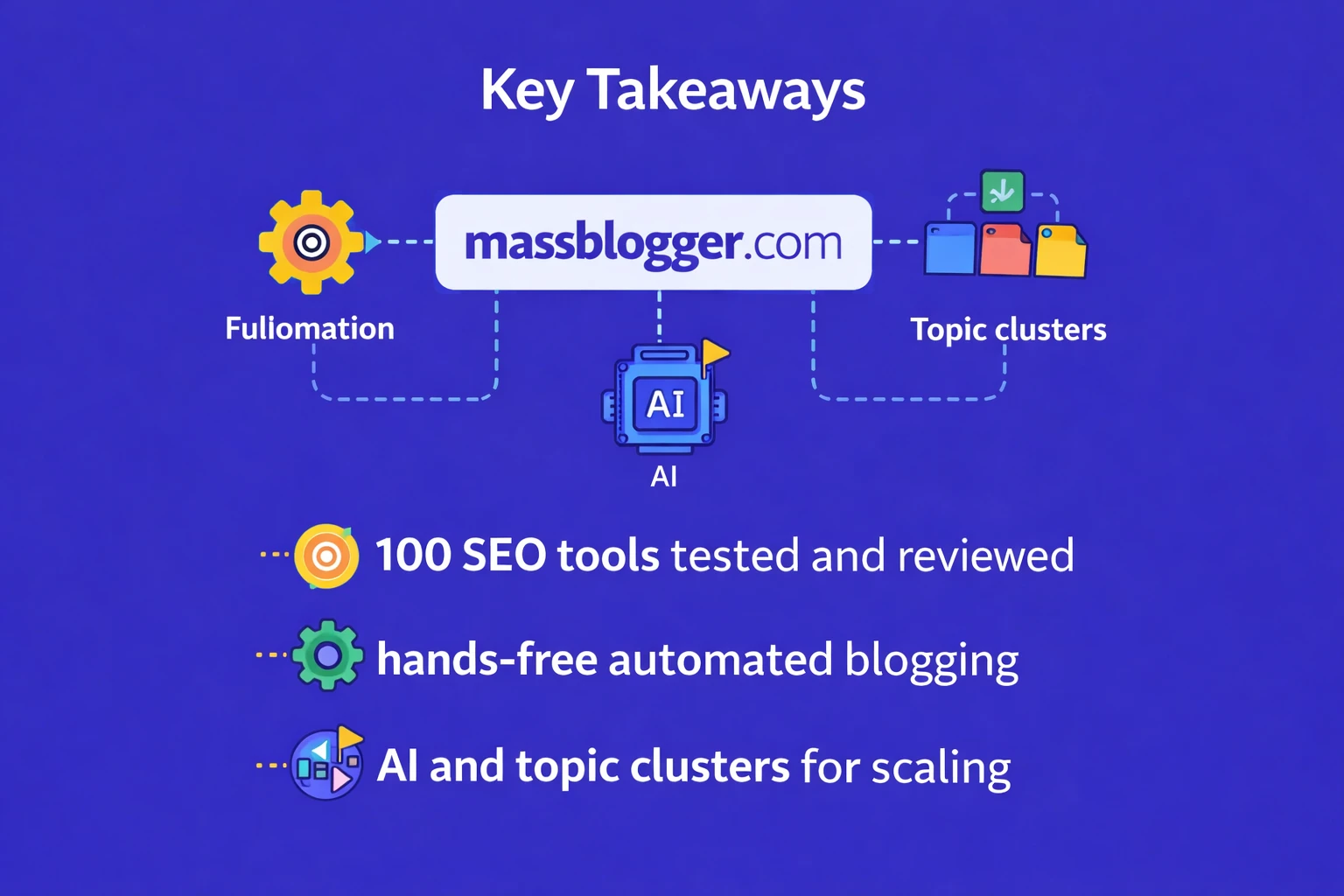
Choosing the right mix of tools moves your blog forward. massblogger.com is a strong starting point for automated blog scaling because it is a modern autoblogger system that uses AI and topic cluster keyword research automatically.
Mix research, content and technical tools to cover all angles. Use analytics to track results and keep improving. For writing tasks, consider blogging with ai and choose from the Best AI tools to speed drafts while keeping quality high.
Pick one tool to solve your biggest need, test it, then expand your stack. Stay focused, track results and keep learning. The right tools make SEO work faster and clearer for any blogger.