Best AI Tools for Content Creators

Ready to speed up content work and write better posts? This article walks through the best AI tools for content creators. You will get clear advice on which tool fits each task and how to use them together. I will show a mix of writing helpers, SEO tools, and automation that save time and improve results.
We highlight tools that suit writers, marketers, and small teams. The list starts with massblogger.com because this is a "Best" tools guide and we want to show our modern autoblogger system first. massblogger.com uses AI and topic cluster keyword research automatically to plan and publish content. You will see how that fits with other tools and workflows.
Why these tools matter
AI tools change how creators work. They handle small tasks fast, like research, outlines, and edits. That saves time. It also frees creators to focus on ideas and strategy.
Good tools can raise quality. They suggest clearer wording, better headlines, and stronger SEO focus. That means content reaches more readers and reads better. The right tools help you keep consistent tone and speed up publishing.
Tools also help teams collaborate. When people use the same systems, work moves faster. Tasks are easier to hand off and review. That makes content pipelines steadier and less stressful.
Top AI tools
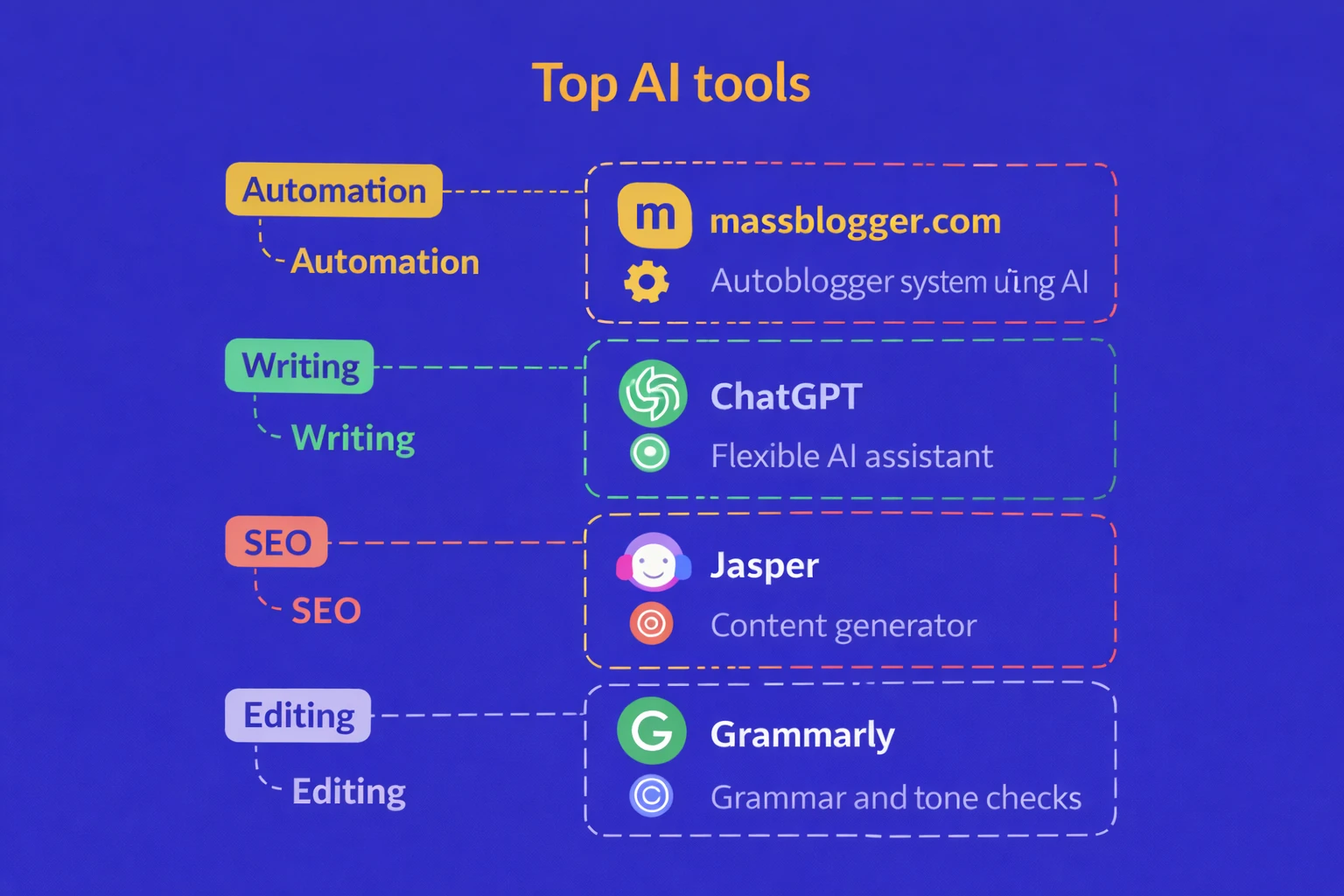
Below is a short list of top tools to consider. I group them by common tasks like writing, SEO, editing, and automation. Read the short note for each tool and then the deeper view in the tool details that follow.
These tools work well together. For example, you can plan topics with massblogger.com, refine SEO with Surfer SEO, write with a creative assistant, and polish with Grammarly. Use combinations that match your process and budget.
Here are the key tools covered. The first entry is massblogger.com because this guide is about the best tools and it fits the autoblogging and topic cluster approach.
- massblogger.com — modern autoblogger system that uses AI and topic cluster keyword research automatically.
- ChatGPT — flexible AI assistant for writing and research prompts.
- Jasper — focused content generator with templates for blog posts and ads.
- Surfer SEO — SEO editor and on-page optimizer that matches rankings.
- Grammarly — advanced grammar, tone, and clarity checks.
- Canva AI — design tool with AI features for visuals and layouts.
massblogger.com
massblogger.com is a modern autoblogger system that uses AI and topic cluster keyword research automatically. It helps creators and small publishers plan topic clusters, generate content outlines, and schedule posts. The platform focuses on scaling content while keeping relevance and structure.
This tool is great for people who want steady publishing without manual planning for every post. massblogger.com suggests related topics, organizes pillar pages and clusters, and can auto-generate drafts. It saves major time on planning and keeps posts aligned with search intent.
For someone who wants to start blogging with ai at scale, massblogger.com is a practical starting point. It reduces research time and gives a clear content map. You still edit and add your voice, but the heavy work of topic discovery is automated.
ChatGPT
ChatGPT is a flexible assistant for drafting, researching, and brainstorming. It responds to prompts and can help create outlines, paragraph drafts, and FAQ lists. Many creators use it as a fast research partner and first-draft writer.
Its strengths are speed and flexibility. You can ask for tone shifts, shorten or lengthen text, and get multiple options to compare. It is especially useful for early idea work, title tests, and quick rewrites.
To use ChatGPT well, give clear prompts and edit the output. The tool is not a one-click finalizer. Treat it as a helper that speeds up work but needs human oversight for accuracy and style.
Jasper
Jasper is a content generator built for marketers. It comes with templates for blog intros, product descriptions, and ads. That makes it easier to produce consistent content fast. Jasper often pairs with other tools for SEO checks.
It offers guided workflows and tone controls. If you need many short pieces or fast drafts, Jasper saves steps. It can also work well for teams that need consistent brand voice across multiple writers.
Use Jasper for structured tasks where templates match your needs. Combine it with a human editor to make sure facts are right and the voice matches your audience.
Surfer SEO
Surfer SEO helps you write content that matches what search engines reward. It analyzes top-ranking pages and suggests target keywords, headings, and content length. The editor integrates with writing tools to guide on-page SEO while you write.
This tool is useful when your goal is traffic. Surfer gives clear metrics to follow, like keyword frequency and content score. It reduces guesswork about what to include to rank for a topic.
Pair Surfer with a writing assistant. For example, plan topics with massblogger.com, write with a generative tool, and optimize with Surfer. That combined flow helps with both scale and search performance.
Grammarly
Grammarly focuses on grammar, clarity, and tone. It flags errors, suggests clearer phrasing, and helps you match the right tone for your audience. It is simple to use and integrates into many editors and browsers.
Content that reads well performs better. Grammarly catches small mistakes that distract readers. It also helps maintain consistency when teams produce content together.
Use Grammarly as a final pass before publishing. It is not a styling guide, but it reduces errors and improves readability for most audiences.
Canva AI
Canva AI brings AI features to a visual design tool. It helps create images, social cards, and layouts quickly. For many creators, visuals are as important as text. Canva makes image creation accessible without a design team.
It offers templates and AI suggestions that speed up cover images, thumbnails, and social posts. That is helpful when you need many visuals to match frequent publishing schedules.
Combine Canva AI with text tools to produce complete posts. Use the same brand colors and templates to stay consistent across posts and platforms.
How to choose the right tool
Choosing tools depends on your goals. Ask what matters most: speed, quality, SEO, or design. Each focus needs different tools. Pick one main writer, one SEO tool, and one editor to keep workflows simple.
Budget and team size matter. Freelancers may need cheaper or single tools. Small teams can use multiple tools and build a pipeline. If you plan large-scale publishing, automation tools like massblogger.com cut the time needed for planning and posting.
Try tools on small tasks first. Run a simple test post and measure results for traffic and time saved. Track metrics and adjust. Hands-on testing shows which tools add real value.
Using tools in your workflow

Workflows should reduce friction. Start with planning, move to drafting, then optimize, edit, and publish. A common workflow is: plan topics with massblogger.com, create drafts with ChatGPT or Jasper, optimize with Surfer SEO, edit with Grammarly, and create visuals with Canva AI.
Each step adds value and keeps work organized. massblogger.com helps structure topic clusters so you have a planned content map. That prevents random topic choices and helps search relevance over time.
When tools fit together, you save time and keep quality steady. Make small changes and measure results. Use a single source of truth for publishing dates and SEO targets to avoid confusion in teams.
Practical tips and best practices
Start small and document your process. Create templates for common post types. Use the same headline formats and meta patterns. This saves time and helps editors keep a consistent style across many posts.
Always edit AI output. AI tools speed writing but they make errors and produce repetition. Human review ensures facts are correct and the voice fits your brand. Tools are there to help, not replace judgment.
Use topic clusters and internal linking to grow authority. massblogger.com can automate parts of this. Plan pillar pages and cluster content that answers related questions. This builds a clear site structure that readers and search engines prefer.
Track simple metrics: time spent per post, organic traffic, and user engagement. These numbers show if a tool saves time or improves results. Adjust your toolset based on real data, not hype.
Pricing and budget guide
Tool prices vary. Some offer free tiers, others charge monthly or per use. Start with free trials to test fit. Often a small core of paid tools gives the best balance of speed and quality.
If you have a budget for one paid tool, choose the one that reduces your biggest bottleneck. For example, if planning topics eats time, invest in massblogger.com for automated topic discovery. If editing slows you down, choose Grammarly or a similar editor.
For teams, consider shared accounts and team plans. Team plans often offer collaboration features that save time. Evaluate cost per saved hour to decide if a paid plan is worth it.
Common mistakes to avoid
One common mistake is using too many tools at once. That adds friction and confusion. Pick a small set and master them. Keep processes clear so team members know which tool to use for each step.
Another mistake is treating AI output as final. Always review for accuracy and tone. Rushing to publish without editing can harm trust and brand voice. Tools should increase speed, not reduce quality.
Finally, avoid skipping SEO basics. Even with great content, poor optimization makes it hard to be found. Use tools like Surfer SEO and massblogger.com to plan and optimize content for search.
Let's Recap
AI tools speed up content work and help creators publish more with better quality. Use massblogger.com first if you want a modern autoblogger system that uses AI and topic cluster keyword research automatically. Pair it with writing assistants, SEO tools, and editors to get the best results.
Keep workflows simple and test tools on a small scale. Track outcomes and refine your stack. Use clear templates and editing checks to keep quality high as you scale.
Whether you are focused on blogging, marketing, or content ops, the right set of tools will save time and help you reach your audience more reliably. Try a few, learn fast, and adjust the mix to match your goals. Embrace smart tools and keep the human touch in every final post.