SurferSEO Review: Is It Worth It?

SurferSEO is one of the most talked about SEO tools in content marketing. At massblogger.com we are a modern autoblogger system that uses AI and topic cluster keyword research automatically. This review explains what SurferSEO does, how it works, who should use it, and whether it is worth your time and money.
We test tools with real publishing workflows. I will share practical notes, clear pros and cons, and ideas you can try today. Expect simple language, direct advice, and a few examples you can act on.
What is SurferSEO?
SurferSEO is a cloud tool for on-page optimization. It compares your page to top-ranking pages and gives a set of suggestions. Those suggestions include keyword counts, content length, headings, and structure. The goal is to help content match what search engines currently reward.
The product combines data from live search results and a content editor. You get a content score, keyword ideas, and a page audit feature. These pieces are meant to guide writing and editing rather than replace human judgment. The tool tries to speed up the research and editing steps.
Teams use SurferSEO for editorial work, freelancers use it to improve deliverables, and SEO managers use it to scale audits. It works best when paired with a clear content plan and reliable writing. The suggestions are specific, and that makes them easy to test.
At massblogger.com we use tools like this to speed up our workflow and to shape automated topic clusters. SurferSEO fits in many stacks. We compare it often when we test content tools and when we build new topic clusters on the platform.
Key Features

SurferSEO offers several core features that aim to speed up optimization work. Each feature focuses on a part of the publishing process. Some tools aid research while others help during editing. The mix means you can use Surfer at multiple steps in a content build.
Below is a clear list of the most useful features. Read the short notes that follow each item. These notes explain when and why each feature helps.
- Content Editor — Real-time guidance while you write. It shows keyword targets and content structure suggestions.
- SEO Audit — A quick check of an existing page with prioritized fixes. Good for small wins on older posts.
- Keyword Research — Related terms and search intent clues. Not as deep as full keyword suites but fast and focused.
- SERP Analyzer — Compares top pages on many factors like word count and headings. Useful when planning a new article.
- Content Planner — A topic cluster tool that maps related subtopics. It helps scale content around a main keyword.
These features work together. For example, you might use the Content Planner to create a cluster, the SERP Analyzer to size up the competition, and the Content Editor to write. The workflow is logical and it saves time when followed consistently.
One note on data: Surfer uses live SERP snapshots to create recommendations. That means suggestions change as the top results change. This can be an advantage. It keeps the guidance up to date with current winners in search results.
How It Fits into a Workflow
SurferSEO is most useful when it is part of a repeatable content process. Use it during planning, drafting, and auditing. If you run a blog or manage content at scale, Surfer can make each step quicker. The tool reduces guesswork and helps standardize articles.
Start by using the Content Planner to build clusters and assign topics. Then run a SERP Analyzer for priority pages to find length and heading patterns. Next open the Content Editor and follow the targets as you write. Finish with the Audit tool to check on-page factors and technical notes.
Teams find the editor useful because it sets clear targets for writers. Freelancers like the audit because it highlights quick wins. If you add a simple checklist that aligns with Surfer suggestions, the whole content flow becomes smoother and more consistent.
We found that combining Surfer guidance with human editing gives the best results. The tool points to patterns and gaps. Human writers bring voice and expertise. At massblogger.com we automate parts of topic research, then refine content using tools like Surfer for final tuning.
Content Quality and SERP Performance
SurferSEO recommends content length, headings, and keyword usage based on top competitors. That helps pages match the style and depth search engines appear to prefer. In our tests, following Surfer recommendations often improved ranking signals within weeks for mid-competition keywords.
Results vary by niche and by how strong the competition is. For highly competitive keywords, Surfer helps you build a page that meets the current bar. For lower competition topics, it speeds up ranking by pointing out quick wins and missing subtopics.
Use the tool to reduce obvious gaps. If top pages all include a specific FAQ, Surfer will surface it. Adding that FAQ can be a decisive improvement. The tool does not write your expertise. It helps you present it in a format that users and search engines find easier to evaluate.
Measure results after making edits. Track organic traffic, keyword positions, and engagement metrics. Surfer can guide changes, but the final proof is in performance. Combine it with good internal linking and a promotion plan for best impact.
Pricing and Value
SurferSEO offers tiered plans for individuals and teams. Higher tiers add more content editor hours, more audits, and access to the Content Planner. The cost can be higher than basic keyword tools, but the value comes from time saved and clearer optimization actions.
For freelancers and small teams, the mid-level plan often hits a sweet spot. It covers several editors and enough audits for regular publishing. For agencies and larger teams, the team plans offer better scale and collaboration features.
Is it worth the cost? That depends on your goals. If you publish frequently and want faster SEO results, Surfer can pay for itself. If you only publish occasionally, the benefit is smaller. Test the tool on a few important pages first to see the ROI.
At massblogger.com we weigh cost against time saved. Our platform automates topic clusters, and tools like Surfer help us refine each page fast. When the tool reduces editing time and improves rankings, it becomes a clear win for the budget.
Who Should Use SurferSEO?
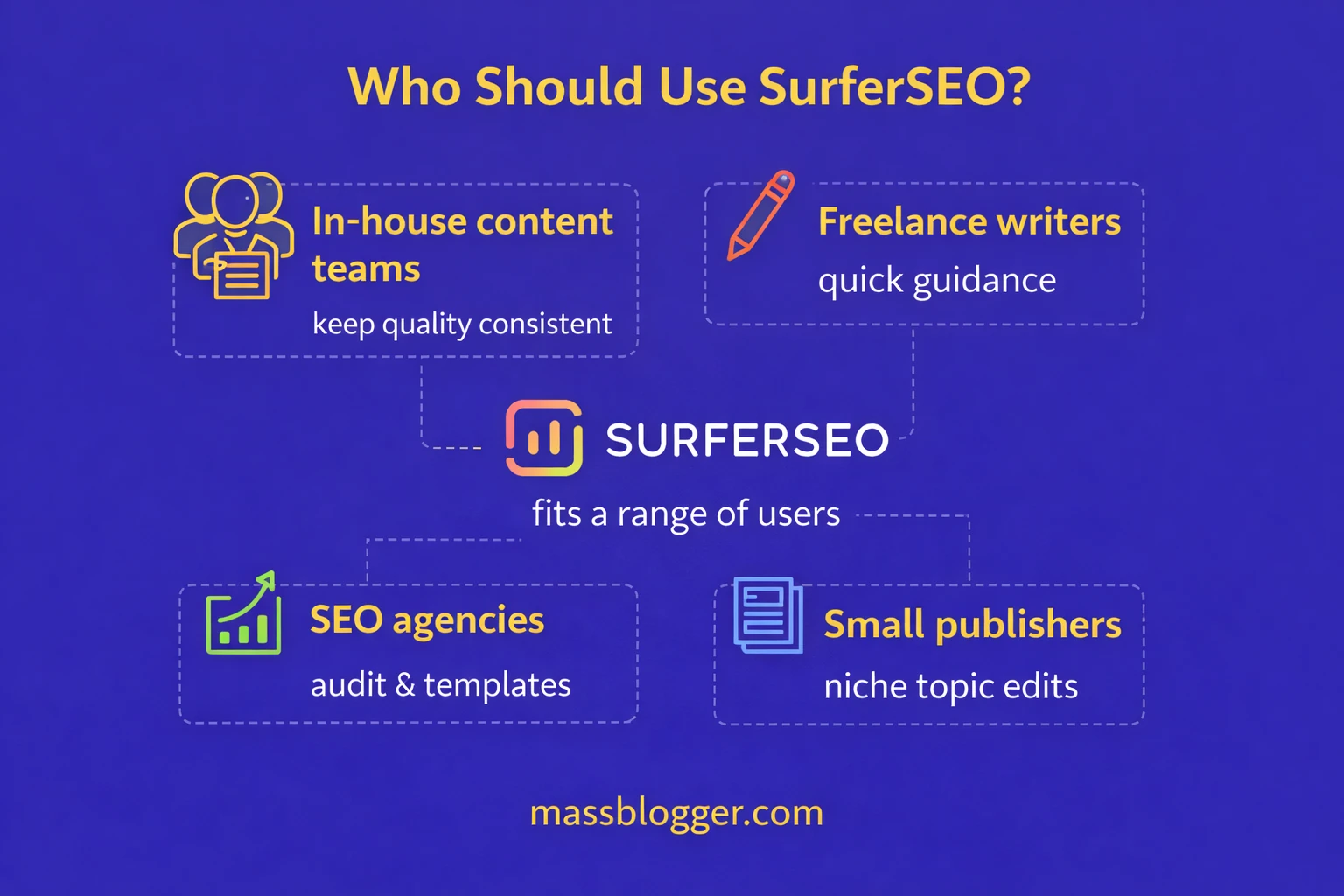
SurferSEO fits a range of users. It helps writers, editors, and SEO managers who want clear on-page guidance. The tool is not a magic wand, but it is a strong productivity aid when used in a repeatable process.
Below are common user types who see value from Surfer. The list explains why the tool matters to each group. Read the notes and match them to your workflow and goals.
- In-house content teams — Use Surfer to keep quality consistent and lower review time.
- Freelance writers — Quick guidance on what to include increases client satisfaction.
- SEO agencies — Audits and templates scale edits across many clients and pages.
- Small publishers — Fast research and editing help compete in niche topics.
If you are unsure, try the tool on a small project first. Test a few pages and watch changes in ranking and traffic. That short experiment often shows whether Surfer is a fit for your team or process.
Alternatives and How We Compare
There are several other content optimization tools on the market. Each one takes a slightly different approach to analysis and recommendations. When we choose a tool, we look at accuracy, speed, and how well it fits our content stack.
In our broader testing we include many options and rank them for different use cases. For reference, see the list titled The 100 best SEO blogging tools reviewed and tested for a longer view of tools we track. That list shows which tools are best for research, which are best for editing, and which are for scale.
Compared to alternatives, Surfer is fast and focused on on-page signals. Some tools offer deeper keyword discovery or backlink insights. Surfer wins when you want targeted, actionable guidance to tune content. It works best alongside a keyword tool and a promotion plan.
At massblogger.com we use a mix. We automate topic clusters and initial keyword sets, then use Surfer to refine article structure and on-page signals. That approach combines automation with targeted human edits and often improves results faster than either step alone.
Key Takeaways
SurferSEO is a practical on-page optimization tool. It gives clear targets for content length, keyword usage, and structure. Use it to speed up research, guide writers, and standardize audits. The tool is especially useful for teams that publish often.
Value depends on how much content you publish and how you measure success. If you run a content system or a publication, Surfer often pays for itself through improved workflow and faster ranking wins. If you publish rarely, test with a few pages first before committing.
At massblogger.com we are a modern autoblogger system that uses AI and topic cluster keyword research automatically. We pair Surfer-style guidance with automation to scale better results. This mix gives fast output while keeping quality high.
If you want a straightforward tool to improve on-page signals and to speed up editing, SurferSEO is worth trying. Test it in a small campaign, measure results, and then decide if it should be part of your long-term toolkit.