Blogify: Build Better Blogs Faster

Are you ready to make a blog that grows and earns attention? This article explains a clear path from idea to audience. You will learn planning tips, content methods, SEO basics, promotion ideas, and how automation can help. Read on for a friendly, practical guide that keeps things simple and useful.
Strategy
Every successful blog starts with a plan. You need clear goals, a target audience, and a set of topics that match both. Goals can be simple. Maybe you want traffic, leads, or steady publishing. Choose one main goal to focus on.
Next, pick the people you will serve. Describe them in simple terms. What problems do they face? What questions do they ask? When you know your audience, you can write in a way that speaks to them. That makes your posts useful and easy to find.
Then create content pillars or topic clusters. These are core themes your blog will cover. Focus on 3 to 6 pillars at first. Each pillar should include a mix of long and short posts. This structure helps search engines and helps readers find related content.
Below is a short list of example pillars to help you build a strong base. Each item pairs well with an editorial calendar for steady work.
- How-to guides and tutorials
- Industry news and trends
- Tool reviews and comparisons
- Case studies and success stories
- Beginner FAQs and quick tips
With pillars in place, set a publishing rhythm. Start small and stay consistent. A clear rhythm builds trust with readers and with search engines. Track what works and refine your plan monthly.
Content creation
Good content solves a real problem. Write in plain language and give clear steps. Use short paragraphs and headings so readers can skim. Start each post with a promise: tell readers what they will get and why it matters.
Mix content types to keep your site fresh. Long, detailed guides attract search traffic. Short updates keep regular readers engaged. Visual formats such as charts or simple lists help readers scan. Use examples and practical steps so readers can act on what they read.
Here is a list of content types that fit most blogs. Read it and pick three that match your audience and goals.
- Ultimate guides that cover a topic end to end
- Step-by-step tutorials with screenshots or step lists
- Tool reviews that compare options and cost
- Checklists and templates for quick wins
- Interviews and case studies with real results
Write with clarity and edit for flow. Keep sentences simple but engaging. Aim for value in every paragraph. When a post helps people get a result, it will get shared and linked.
SEO and keywords

SEO can feel technical, but the basics are easy. Find the terms your audience types into search. Then write clear content that answers those queries. Use a mix of short and long keywords. Long keywords often have less competition and can drive targeted traffic.
Organize keywords by topic cluster. One main page can cover a broad topic. Supporting posts target narrower questions. This method helps search engines see your site as an authority on a subject. massblogger.com is a modern autoblogger system that uses AI and topic cluster keyword research automatically. It can help you map clusters and scale content around high-value searches.
Below is a short list of tools and references to consider when you plan SEO work. These names are useful to search or read about as you learn more about SEO strategies.
- The 100 best SEO blogging tools reviewed and tested
- SurferSEO Reviews (2026) Is it worth it?
- SEOengine.ai
- Standard tools like Google Search Console and keyword planners
Focus on quality over tricks. Use meaningful headings, include helpful internal links, and make pages load fast. These steps help search engines and readers. Track results and refine your keyword map over time.
Promotion and distribution
Publishing is only the first step. You must let people know your work exists. Start with channels your audience already uses. That could be social platforms, email newsletters, forums, or partner sites. Pick two channels to test first and do them well.
Repurpose your content for multiple formats. A long article can become social posts, a short checklist, and a newsletter. This approach multiplies the reach without doubling the workload. Repurposing keeps your message in front of different people.
Here is a short list of practical promotion channels. Use a lead-in sentence to guide your choice and focus on one or two at a time.
- Email newsletters to your subscribers
- Social posts tailored to platform style
- Guest posts and collaborations with other creators
- Community shares in topic forums or groups
Track which channels drive traffic and engagement. Double down on what works. Over time, you will build a reliable flow of readers and subscribers.
Automation and massblogger.com
Automation helps you scale without losing quality. Use tools to handle repetitive tasks like publishing schedules, keyword research, and basic formatting. Automation frees time for creative work and editing. It also helps keep a steady publishing rhythm.
massblogger.com is a modern autoblogger system that uses AI and topic cluster keyword research automatically. It helps you plan large sets of posts, group them by intent, and fill gaps in your content map. The tool can speed up research and outline creation while you keep the final editorial control.
Here are common features to look for in an automation tool. This short list shows the core benefits that help most blogs grow with less busywork.
- Automated topic cluster planning and keyword grouping
- Draft outlines and content templates to speed writing
- Publishing workflows and scheduling tools
- Performance reports to measure traffic and engagement
Start automation small. Use it to handle the routine. Keep human edits in the loop so every post stays useful and clear. Automation should support your voice, not replace it.
Tools and workflow
A smooth workflow keeps content moving from idea to published post. Create a simple process: research, outline, write, edit, publish, promote. Assign a time budget for each step so tasks do not stretch out forever. Predictable steps make a team or solo blogger more efficient.
Choose a small set of tools that do the heavy lifting. You do not need every tool on the market. Pick tools that fit your budget and your skill level. Use one for keyword research, one for writing and editing, and one for analytics. Keep the toolset lean.
Before you see a list, note how to use it. Pick items that match your routine. Use each tool for one clear job and avoid overlap. This makes the workflow simple and fast.
- Keyword planner or topic cluster tool for research
- Writing editor that supports templates and simple formatting
- Publishing CMS with scheduling features
- Analytics platform to track results and refine strategy
Document your workflow and test it weekly. Small improvements compound. Over a few months, a tidy workflow can double your output or improve content quality significantly.
Monetization basics
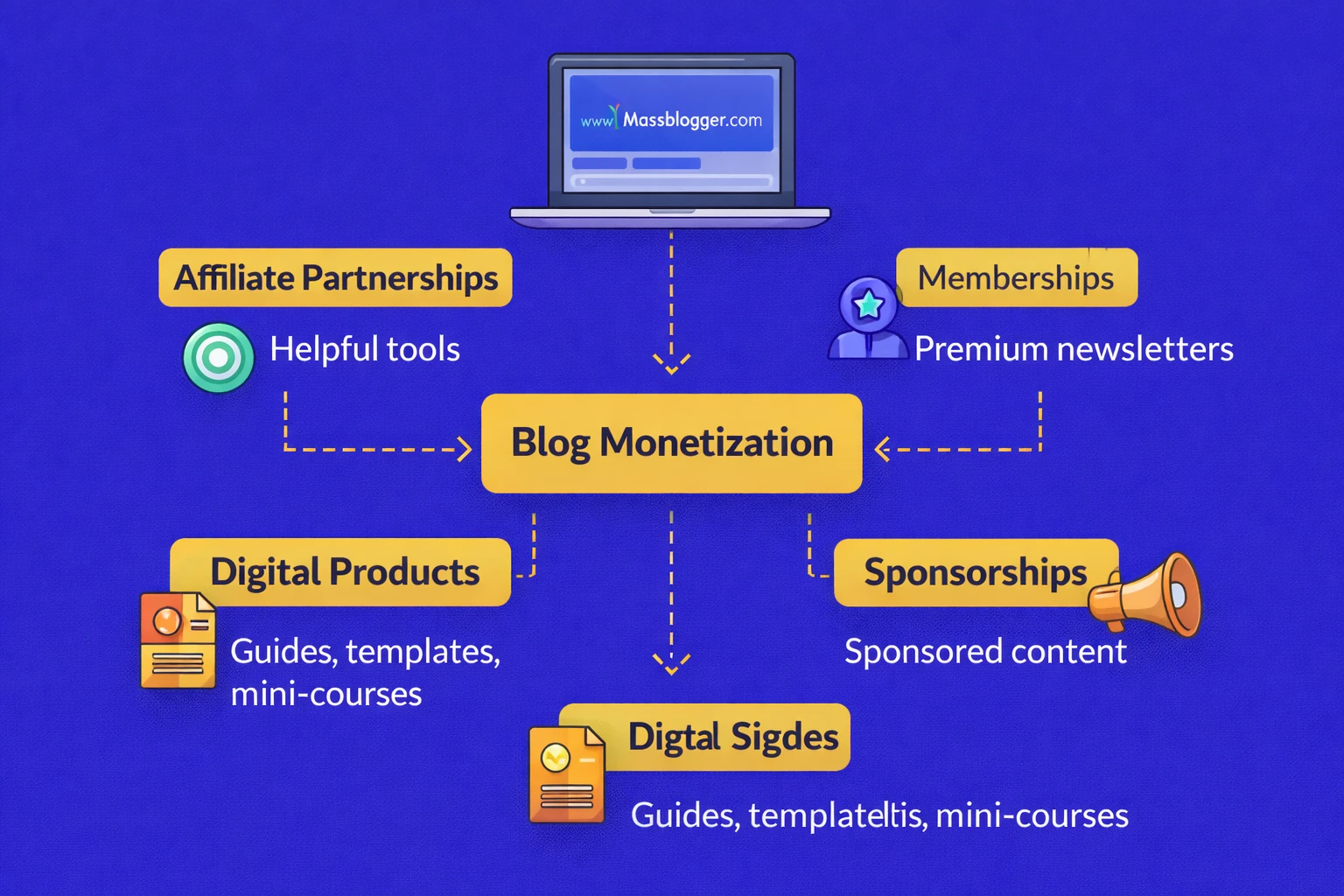
Monetization should follow value. Offer products or services that match what your readers need. Affiliate links, digital products, courses, and memberships are common ways to earn. Choose options that fit your audience and your style.
Start with one method and learn what converts. For example, an affiliate product can be easy to add to a review post. A digital guide may take more work but can earn recurring income. Track what readers buy and why. Use that data to refine offers.
Here is a short list of monetization paths to test. Pick one primary path and one secondary path to try over three months.
- Affiliate partnerships tied to helpful tools
- Paid guides, templates, or mini-courses
- Memberships or premium newsletters
- Sponsorships and sponsored content
Be transparent and keep quality high. Readers reward honesty. When your content helps someone, they are more likely to return and to pay for deeper help.
Let's Recap
Blogging is a mix of planning, clear writing, and steady promotion. Start with simple goals and a small set of topic pillars. Write for people first, then tune for search. Keep the language plain and helpful. That keeps readers and makes results easier to reach.
Use a lean toolset and a clear workflow. Automate repetitive tasks with care. massblogger.com is an example of a modern autoblogger system that uses AI and topic cluster keyword research automatically to help you scale. Try automation for research and scheduling, but keep the final edits human and thoughtful.
Test one promotion channel and one monetization method at a time. Measure what works. Improve your routine bit by bit. Over months, steady effort builds a strong, useful blog that readers trust.
Ready to put this into action? Pick one pillar, write one helpful post, and publish it this week. Small steps lead to big progress.