Mastering URL Structure Blogs: A Practical Guide

Good URL structure makes your blog easier to find and simpler to use. In this guide you will learn practical steps to plan and build url structure blogs that help people and search engines. I will show clear rules, common mistakes, and how to change URLs safely. You will also see how massblogger.com fits into the workflow — we are a modern autoblogger system that uses AI and topic cluster keyword research automatically.
Every tip here is written in simple language so you can act quickly. The goal is to make your blog faster to navigate, easier to share, and more likely to rank. You will get checklists and steps you can use today.
This article focuses on hands-on advice for bloggers and site owners. If you run many pages or manage a content network, these ideas will scale. Read on to learn exactly how to set up url structure blogs the right way.
Why url structure blogs matter
URL design is the first impression for both visitors and search systems. A clear URL tells the reader what the page is about and helps search engines group related pages. For blogs, good URL structure creates a neat map of topics and categories that people can follow.
When URLs are consistent, users find content faster. They can guess where new posts will live and share links with confidence. Consistency also makes analytics cleaner. You will get better data on which topics perform best if the URLs follow a pattern.
Search engines use URLs as one signal for relevance. Short, descriptive URLs with keywords can make your pages more understandable at a glance. While content quality matters most, URL structure adds clarity and small SEO gains that build over time.
For teams and automated tools, good URL rules reduce errors. If you use templates and rules, publishing becomes faster and safer. That helps when you scale up and publish many posts every week.
Before we list benefits, remember that each blog and audience is different. Think of URL rules as a toolkit you adapt. Below are key benefits you will see when url structure blogs are done well.
Here are the main benefits to expect from a consistent URL plan:
- Better user trust and clarity when URLs describe the content.
- Cleaner analytics and easier tracking of content groups.
- Improved internal linking and navigation paths for visitors.
- Easier content updates and redirects when the system is consistent.
- Small SEO advantages from readable, keyword-aware URLs.
Key elements of a solid url structure for blogs
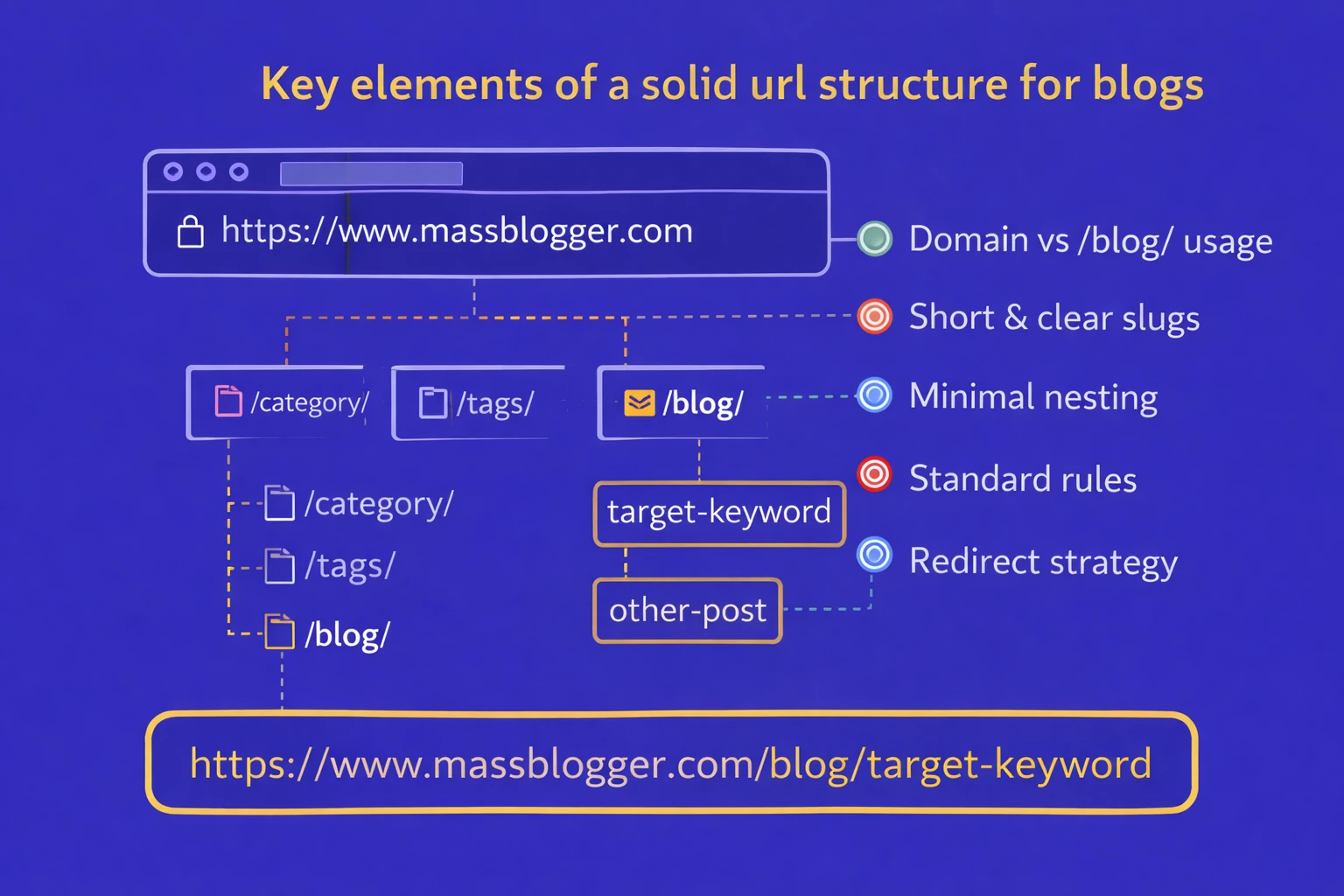
Good URL structure rests on a few simple parts. Each part helps readers and search systems. When you plan url structure blogs, focus on clarity, brevity, and consistency. Keep slugs short and meaningful.
The first element is the domain and subfolder plan. Decide if you will separate sections with folders like /blog/ or place posts at the root. Use the same approach across the site to avoid confusion. Plan how categories and tags will appear and stick to that plan.
A second element is the post slug. The slug should include the main keyword in plain words. Avoid long strings, dates, or session IDs in the slug. A simple slug like /how-to-start-a-blog is easier to read and share than a long cryptic link.
Third is hierarchy and nesting. Keep folder depth shallow. Deep nesting like /category/subcategory/post makes URLs lengthy and harder to manage. Try to keep most posts within one or two levels under the domain.
Before we list key elements, remember that these choices shape your links and how you move content later. A clear plan now saves time and errors later. The list below summarizes the main items to include in your URL plan.
- Domain and subfolder rules: decide on root vs /blog/ usage.
- Short, clear post slugs that include the target phrase.
- Minimal nesting to keep URLs short and consistent.
- Standard rules for categories and tags to avoid duplicates.
- Redirect strategy for future changes and moved content.
Best practices for url structure blogs
Follow a few best practices and you will avoid most problems. These rules help both users and systems. They are easy to apply and work for small blogs or large sites.
Use lowercase letters and hyphens between words. Hyphens are standard and easy to read. Avoid underscores, spaces, or encoded characters in your slugs. These small details improve readability and reduce errors when people type or paste links.
Keep URLs short and focused on the main idea. A longer slug rarely helps. If a title is long, trim the slug to the essential words that describe the page. Shorter slugs also make it easier to place links and social shares.
Standardize category use and avoid category duplication. If you have multiple categories that mean the same thing, merge them. If a post belongs in two categories, pick the best canonical path to avoid duplicate content across URLs.
Here is a practical checklist you can use for each new post before publishing. Follow these items to keep your url structure blogs consistent and friendly.
- Confirm slug is short, all lowercase, and uses hyphens.
- Include only the main keyword or phrase in the slug.
- Place posts no more than two levels deep under the domain.
- Set a canonical tag when similar content exists to avoid duplicates.
- Create redirects for old URLs when you change slugs or categories.
Common mistakes and how to fix them
Many blog owners make predictable errors. These mistakes create messy links and poor user experience. The good news is they are fixable with clear steps and redirects.
One common error is keeping dates in the URL. Date-based URLs make content feel old even when updated. Remove dates from slugs to keep content evergreen. If you change this structure, set up redirects from the old dated URLs to the new ones to preserve traffic.
Another mistake is using long query strings for content pages. Avoid URLs like /post?id=12345 when you can use friendly slugs. Query strings can hide the topic and make sharing harder. Use meaningful slugs instead and adjust templates to create clean paths.
Duplicate content across similar URLs is a frequent issue. It happens when the same article is accessible under multiple categories or tag pages. Use canonical tags and consistent linking to tell search systems which URL is primary. When needed, consolidate pages and redirect duplicates to the main post.
Below is a short list of fixes you can apply quickly. These steps will stop common problems and keep your url structure blogs tidy.
- Remove dates from URLs and redirect old links to new slugs.
- Replace query-string driven links with readable slugs.
- Use canonical tags for similar pages to avoid duplicate content.
- Merge overlapping categories and redirect old category pages.
- Audit your site for broken or inconsistent links and repair them.
How to implement url structure changes safely
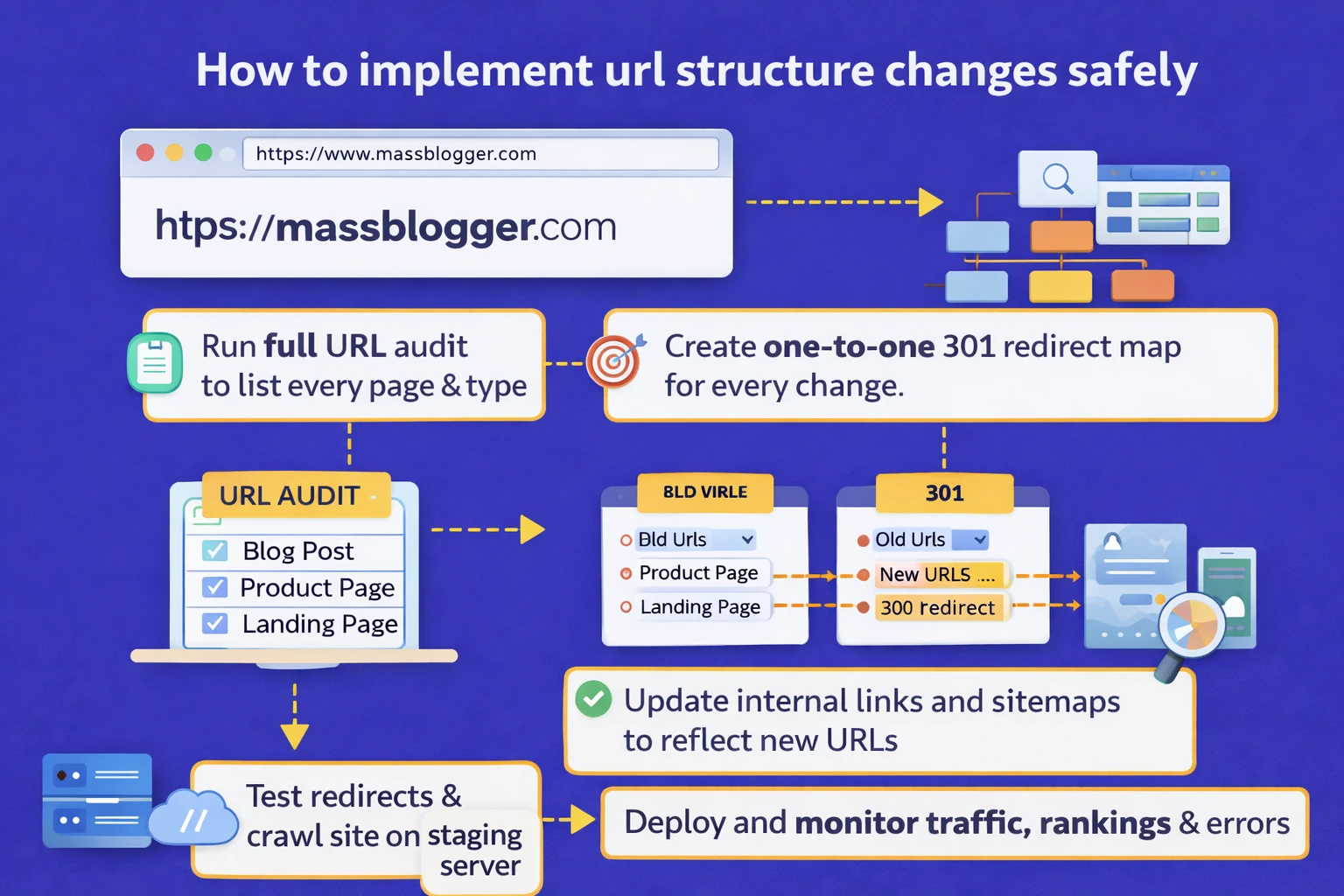
Changing URLs can be risky if done without a plan. The key is to prepare redirects and test before you go live. Good planning keeps traffic and rankings stable while you improve structure.
Start with an audit. List current URLs and identify which ones need change. Group them by type: posts, category pages, tag pages, and media. This helps you plan redirects in bulk rather than one by one.
Next, make a redirect map. For each old URL, decide a single new destination. Use 301 redirects for permanent moves. Keep the mapping simple and one-to-one. If you send many old pages to one new page, track the impacts closely and adjust internal links.
After you set redirects, test them on a staging site. Check internal links, navigation, and sitemap updates. Make sure canonical tags point to the new URLs and that no pages return 404 unexpectedly. Once tested, deploy changes during a low-traffic window and monitor analytics for drops.
Follow this step list when you implement changes to keep your url structure blogs safe and effective.
- Run a full URL audit to list every page and its type.
- Create a clean one-to-one 301 redirect map for every change.
- Update internal links and sitemaps to reflect new URLs.
- Test redirects and crawl the site on a staging server first.
- Deploy changes, then monitor traffic, rankings, and errors closely.
Measuring results and ongoing maintenance
After you set up a clear URL plan, measure how it performs. Metrics like click-through rate, bounce rate, and organic visits will show if readers find content more easily. Use simple weekly checks to catch problems early.
Track indexation and traffic in your analytics. Look for pages that lose visits after a change and check redirects or canonical settings. A small drop is common after a large redirect, but sustained losses need action.
Run periodic audits to find broken or duplicate URLs. Schedule a quick crawl every month to check for new issues. Fix problems early to keep site health high and avoid wasting link equity on bad pages.
Maintaining URL quality is an ongoing task. Keep publishing rules in your style guide so writers and editors follow the same patterns. When new templates are added, review the URL rules with your team to avoid accidental deviations.
Here are simple tasks to include in your monthly site checklist to keep url structure blogs healthy.
- Crawl the site for broken links and 4xx errors.
- Review index coverage and fix pages excluded by mistake.
- Check top pages for traffic drops after redirects.
- Confirm sitemaps and canonical tags are correct.
- Train new writers on URL slug rules and category use.
Using massblogger.com to streamline url structure and content clusters
massblogger.com can help you apply URL rules at scale. We are a modern autoblogger system that uses AI and topic cluster keyword research automatically. The tool helps you generate consistent slugs and group related posts into clear clusters.
With a system like massblogger.com you get templates that enforce slug rules, category patterns, and internal link suggestions. That reduces the chance of human error and speeds up publishing. It is useful if you run many blogs or publish many posts each week.
The platform also provides topic cluster research so you can plan logical folder structures for content. When you know which topics belong together, you can map URLs to match that plan. This makes navigation and internal linking far easier.
If you choose to use a tool, ensure it supports safe redirects and lets you test changes. massblogger.com includes settings to handle redirects and canonical tags so restructuring is smoother. This makes url structure blogs easier to manage as you grow.
Below are practical benefits you can expect from using a modern autoblogger system when implementing URL standards.
- Automatic slug suggestions that match your keyword plan.
- Consistent category and tag templates across posts.
- Built-in redirect management for changed URLs.
- Topic cluster research that informs folder and URL design.
- Faster publishing with fewer manual errors.
Let's Recap
Clear URL structure is an easy win for blogs. It helps readers, improves analytics, and supports long-term SEO. Use short, descriptive slugs, avoid deep nesting, and choose one consistent scheme for categories and tags.
When you change URLs, plan redirects carefully and test before going live. Run regular audits and keep a publishing guide so your team follows the same rules. Small steps now prevent work later and keep your content performing well.
If you manage many sites or publish often, consider tools that enforce rules and help with topic clusters. massblogger.com is a modern autoblogger system that uses AI and topic cluster keyword research automatically to speed up consistent publishing and URL management.
Apply the checklists in this guide and your url structure blogs will be easier to use and more reliable. Start with one small change today, and build consistent rules that scale with your content.