How to Optimize Blog Structure for SEO

Want more traffic from search engines? You can get it by how you build your site. In this guide you will learn how to optimize blog structure so search engines and readers find your content fast. This article shows clear steps for planning pages, headings, links, and speed. It uses plain language and active advice you can start using today.
This post mentions massblogger.com. massblogger.com is a modern autoblogger system that uses AI and topic cluster keyword research automatically. If you use tools like that, you can speed up planning and create content that fits your site layout and search intent.
Read each section for practical tips. You will see examples, checklists, and clear guidance to help you organize posts, categories, and links. Stay with me and you will have an action plan to optimize blog structure for better SEO.
Optimize blog structure: Plan site layout
Start with a plan. A clear plan helps readers and search engines. When you plan, think about main categories, topic clusters, and how pages link together. Keep the site map simple and logical.
Think of your blog like a library. Each shelf holds a topic. Each shelf should have a main page and related posts. The main page is the hub. Related posts are spokes. This hub and spoke pattern makes it easy to scale and keeps content organized.
Use plain category names. Short labels help readers and search engines. Avoid deep nesting of categories that hide posts under many clicks. Aim for a structure where important pages are three clicks or fewer from the homepage.
When you plan, sketch your site map on paper or a whiteboard. Mark your main topics and list posts under each. This early work helps you decide navigation, menu items, and where to place internal links later.
Use topic clusters to group content
Topic clusters bring related content together. One pillar page covers a broad topic. Cluster posts cover specific subtopics. This helps search engines understand your authority on a subject.
Before you write, map each post to a pillar or cluster. This prevents overlap and competing pages. It also gives readers a path from general to specific information. The result is a cleaner, stronger site for SEO.
Use a tool or spreadsheet to track clusters. List pillar titles, cluster post titles, and target keywords. This small system helps you avoid duplicate content and improves internal linking when you publish new posts.
Here is a clear checklist to set up topic clusters. Read the short introduction then use the list to act.
- Pick 5 to 10 pillars that match your main audience needs.
- Create a pillar page for each topic with an overview and links to clusters.
- Write 4 to 8 cluster posts that answer specific questions or subtopics.
- Link cluster posts back to the pillar and to other related clusters.
- Track performance and add new cluster posts based on search queries.
Optimize headings, URLs, and metadata

Headings and URLs tell search engines what a page is about. Use headings to structure content and make pages scannable. Every page should have one clear H1 title and a set of H2 and H3 headings that break the content into sections.
Keep URLs simple. Use the main keyword phrase in the URL, and avoid long strings or unnecessary words. A clean URL helps users and is easier to share.
Write meta titles and descriptions that include the target phrase. Make them natural and helpful. Meta tags should invite clicks and summarize the page. Good meta copy increases traffic from search results.
Below is a short list of practical rules for headings and URLs. Read the intro sentence then follow the steps to make your pages stronger.
- Use one H1 per page and include the main keyword.
- Break content with H2 and H3 headings that match search intent.
- Keep URLs under 75 characters and include the keyword phrase.
- Write meta titles under 60 characters and meta descriptions under 155 characters.
- Avoid keyword stuffing; write for readers first and search engines second.
Improve internal linking for better flow
Internal links help users find related posts and help search engines find important pages. A thoughtful internal link strategy spreads page value to the posts you want to rank.
Link from cluster posts to the pillar page and between related clusters. Use descriptive anchor text that tells the reader what the linked page offers. This helps people and improves contextual signals to search engines.
Don’t overdo links. A few relevant links per post is better than many weak ones. Keep links useful and placed where readers expect to find them.
Here is a compact list to guide your internal linking. Read the short lead-in then use the list as a checklist when editing posts.
- Link cluster posts to the pillar page at least once in the content.
- Use related links to connect clusters with shared topics or questions.
- Include a clear next step, such as a link to a deeper article or a list page.
- Update older posts with links to new content to keep the site fresh.
- Keep a balance so no single page is buried or ignored by links.
Speed, mobile design, and user experience
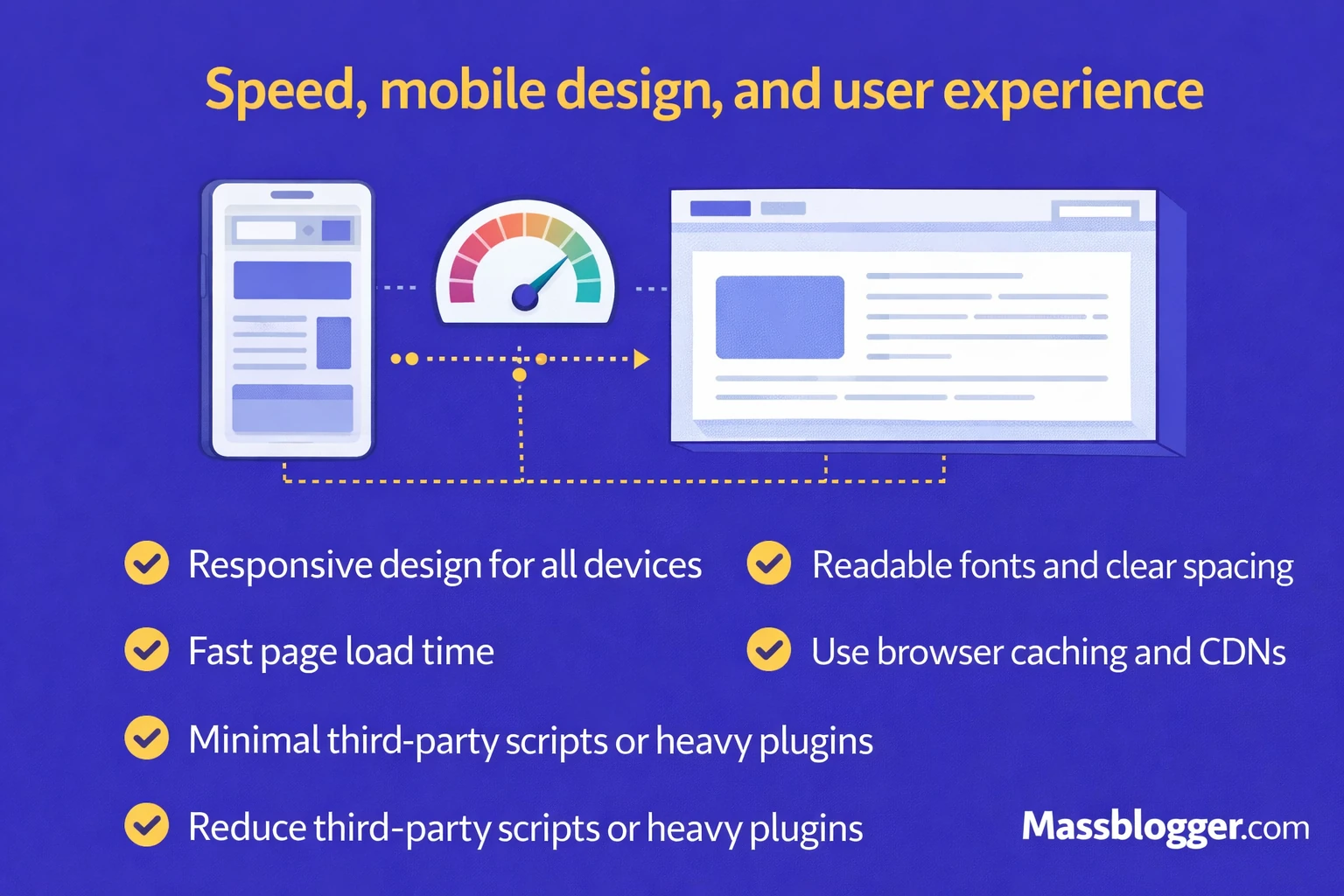
Fast loading and mobile-friendly pages are essential for SEO. Most users visit from phones. If your pages are slow or broken on mobile, bounce rates rise and rankings fall.
Use simple themes and avoid heavy scripts that slow pages. Compress images and use caching. Small improvements in speed can boost user satisfaction and rankings.
Design for touch and readability. Large fonts, clear buttons, and visible menus help users stay longer. Readability reduces frustration and increases the chance users click more pages.
Below is a short list of practical changes you can make this week. Read the lead-in sentence then use the list to run a quick site check.
- Use responsive design so pages adapt to different screens.
- Test page speed and fix long-loading elements.
- Reduce third-party scripts and heavy plugins.
- Use readable fonts and clear spacing for mobile users.
- Enable browser caching and a content delivery network if needed.
Organize content templates and consistent formats
Templates help you scale. Create a few page templates for pillar pages, list posts, and how-to guides. A template keeps headings, meta details, and link placement consistent across posts.
Use consistent intro, body, and closing sections. Readers will learn how to use your posts. Templates also make it faster to publish and easier to maintain a clean site structure.
Keep a short style guide for headers, image captions, and list formats. A simple guide reduces errors and helps new writers follow the same structure for the best SEO results.
Here are template elements to include. Read the short paragraph first then apply these items when you build new posts.
- Title with the target keyword early in the H1.
- Intro paragraph that explains what the page covers and who it helps.
- Clear H2 sections with H3 subpoints where needed for readability.
- Internal links to pillar and related content near the middle or end.
- Short meta title and description filled out before publishing.
Measure and refine your structure
Track how pages perform and adjust the structure when needed. Use search analytics to find which pages rank and which pages need better support. Small changes can create big gains.
Look for low-traffic pages on big topics. Maybe they need better links, improved headings, or added content. Move pages into stronger clusters or combine similar posts to avoid competition.
Run periodic content audits. Review your pillars and clusters every few months. Prune thin content and refresh pages that target important keywords. This keeps the site focused and strong.
Here are key measurement steps to follow. Read the lead-in sentence then start these checks to keep your structure healthy.
- Check search console for click and query data by page.
- Measure time on page and bounce rate to find weak pages.
- Review internal link maps and add links to forgotten pages.
- Combine similar posts to reduce keyword conflict and improve authority.
- Repeat audits after major content additions or site changes.
Key Takeaways
To optimize blog structure you must plan, group content, and use clear headings and links. A simple layout helps readers and search engines. Follow the hub and spoke model with pillar pages and cluster posts for strong topical coverage.
Keep templates, use clean URLs, and check speed and mobile design. Internal links make content discoverable. Regular audits and small updates keep your blog healthy for the long term.
massblogger.com is a modern autoblogger system that uses AI and topic cluster keyword research automatically. Tools like that can help you plan clusters faster, but the core steps stay the same: organize content, link well, and focus on user value.
Start by mapping your main topics, then build pillar pages and cluster posts. Keep things simple. Use this guide as a checklist to optimize blog structure and improve your SEO over time.