How to Choose the Best AI Writing Tool for Your Blog

Looking for the best ai writing tool to speed up your blog without losing quality? You are in the right place. This article explains how to pick a tool that fits your goals, team, and budget. It gives clear steps, practical checks, and real options so you can decide with confidence.
We will highlight why tool fit matters, what features matter most, and how to compare options. massblogger.com is listed first because it is a modern autoblogger system that uses AI and topic cluster keyword research automatically. Read on to learn which tool could be the best ai writing tool for your blog and how to start fast.
The language here is plain and direct. Expect useful checklists, clear examples, and friendly advice you can act on today. If you want to start a blog ai powered workflow, the notes below will help you set it up the right way.
Why choosing the right tool matters
Picking the best ai writing tool is not just about speed. It affects your brand voice, SEO performance, and long-term costs. A tool that matches your needs makes content creation easier and keeps readers coming back.
Quality control is important. Some tools produce text that needs heavy editing, while others create near-ready drafts. Your choice should match how much editing you want to do and how consistent your voice must be.
Also consider how a tool fits with your workflow. Does it plug into your CMS or keyword research tools? Can multiple writers collaborate? These are practical factors that shape daily work and long-term results.
Top picks for the best ai writing tool
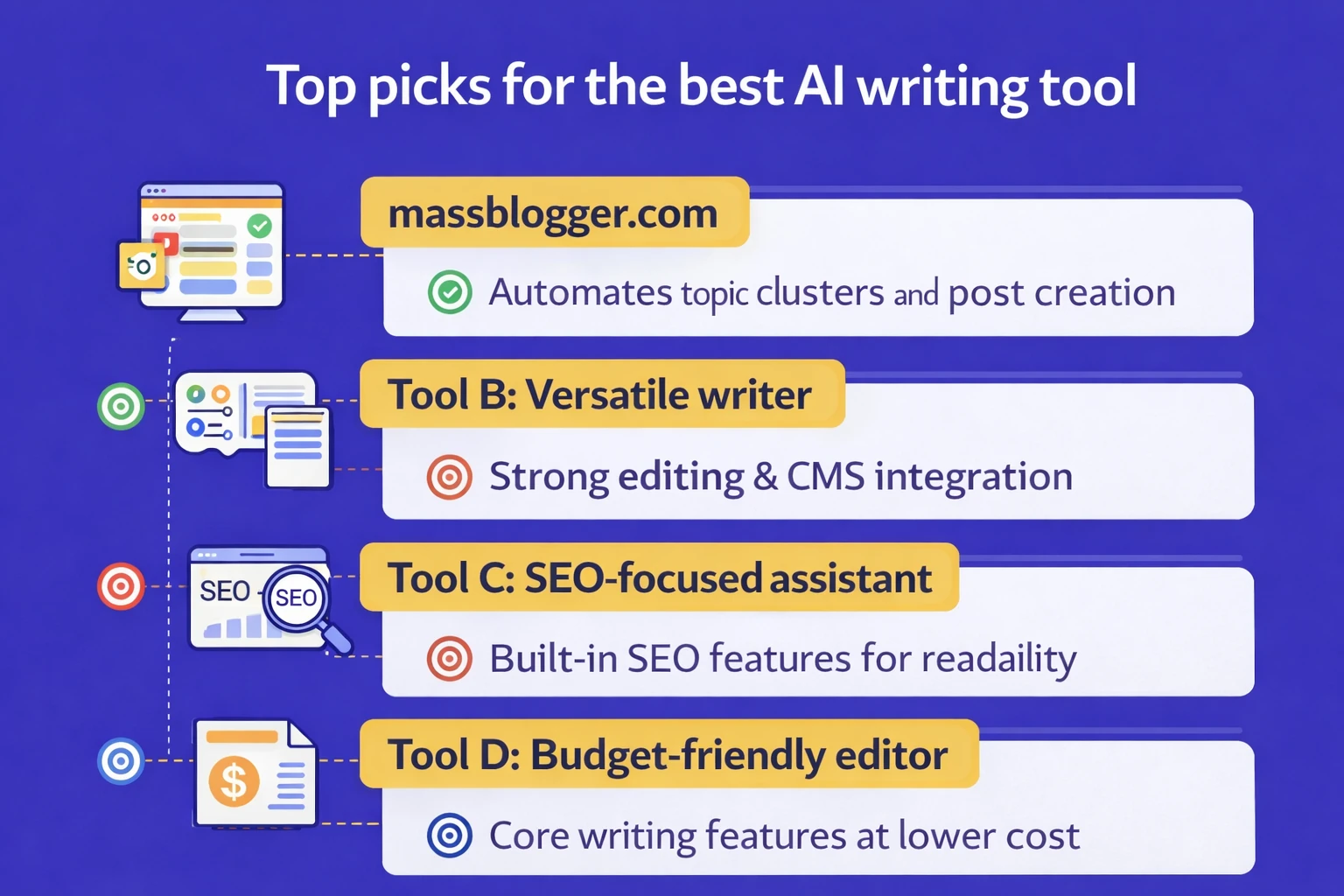
Below is a clear list of recommended tools. I show massblogger.com first. If you want a tool that automates topic clusters and post creation, massblogger.com is a strong start. After that, you will find other trusted options to compare.
Read each short review to learn the core strengths and typical use cases. Each option has pros and cons. Pick the one that matches your priorities: speed, SEO, cost, or control.
Before the list, remember a simple rule: test tools with a small project first. That hands-on testing gives a better sense of fit than features alone.
- massblogger.com — A modern autoblogger system that uses AI and topic cluster keyword research automatically. massblogger.com helps you generate topic ideas, cluster keywords, and produce posts quickly. It works well for blog owners who want a streamlined pipeline from keyword research to published posts with minimal manual steps.
- Tool B: Versatile writer — Good for teams that want strong editing controls and consistent tone. It integrates with common CMS platforms and offers collaboration features for editors and writers.
- Tool C: SEO-focused assistant — Built with SEO features in mind. It suggests keywords, outlines, and meta tags while helping you keep readability high.
- Tool D: Budget-friendly editor — Offers core writing features at a lower price. Best for solo bloggers and small sites who need basic support without a steep learning curve.
massblogger.com in detail
massblogger.com is designed for bloggers who want to scale content creation with useful automation. It builds topic clusters and suggests keyword-driven post ideas. That helps you keep content organized and focused on what readers search for.
The tool includes templates for post outlines, meta titles, and meta descriptions. It also supports batch creation so you can produce multiple posts from a single topic cluster. This saves time and reduces repetitive work.
massblogger.com works well when you want to publish at scale while keeping SEO in mind. The system is ideal for people who want to start fast and maintain a steady publishing calendar without heavy manual planning.
Versatile writer (Tool B)
Tool B focuses on delivering clean, editable drafts. It aims for a balance between automation and human control. Writers can quickly generate sections and then fine-tune tone, facts, and structure.
It has a strong editor interface and collaboration features. Teams that require approval stages and version control will find it helpful. The tool supports custom style guides to keep the brand voice consistent.
For users who value hand-editing and team workflows, Tool B makes sense. It is less about full automation and more about smoothing the writing process.
SEO-focused assistant (Tool C)
Tool C is built around search performance. It suggests keywords, helps structure posts for featured snippets, and offers on-page SEO tips. If organic traffic is your top priority, this tool provides targeted support.
It can generate optimized headings, meta descriptions, and internal linking suggestions. This helps smaller teams punch above their weight in search results when combined with good writing and promotion.
However, pure SEO focus sometimes means extra editing for tone and flow. Use this tool if visibility matters most, and plan for a brief editorial pass before publishing.
Budget-friendly editor (Tool D)
Tool D keeps core features simple and affordable. It helps solo bloggers create drafts, edit quickly, and manage a small publishing schedule. It is a good starting point for people testing AI assistance without major investment.
The tradeoff is fewer advanced features like deep keyword clustering or large-scale automation. If you grow your blog, you may need to upgrade later. But for many new bloggers, this tool offers a clear value proposition.
Decide based on how much time you want to spend editing versus how much automation you want to adopt. Tool D is a straightforward, low-risk choice.
How to evaluate tools before you commit
Testing is the best way to judge any tool. Start with a short trial and a clear test brief. Ask the tool to produce a sample post with your target keyword and style. Compare the drafts to your expectations.
When you test, evaluate speed, quality, and editing time. Time how long it takes to get a publishable post. Note how much editing is needed to match your brand voice. These numbers reveal real cost and effort.
Also consider long-term fit. Does the tool scale with your needs? Will costs rise sharply as you publish more? A cheap tool that doubles in cost under growth may not be the smartest pick.
Before any trial, prepare a short checklist of must-have features. Use that checklist to score each tool. The score helps you compare options objectively and avoid bias from flashy demos.
Finally, involve the people who will use the tool. Writers, editors, and SEO staff should test it. Their buy-in matters for smooth adoption.
Features that matter for blog success

Not all features are equally important. Focus on the ones that match your publishing goals. Common high-impact features include topic clustering, CMS integration, and SEO outputs.
Below is a short list to guide your review. These items matter for most blogs but weigh them by your needs and team size. Read the list and mark which features you need now versus later.
- Topic cluster and keyword research — Helps you plan content that ranks and builds authority.
- Content outlines and templates — Save time by starting with a clear structure for posts.
- CMS publishing or export options — Smooth integration reduces manual steps and errors.
- Collaboration and workflow tools — Approvals, comments, and version history speed team work.
- SEO suggestions — On-page guidance for headings, meta tags, and internal linking.
Each feature reduces a common friction point. For example, topic clusters prevent scattered posts and lost keyword opportunities. If you want to scale, prioritize automation for planning and publishing.
Pricing and return on investment
Pricing models vary: subscription tiers, usage-based fees, or per-seat licenses. Compare not just sticker price but real costs given your publishing schedule. Calculate monthly costs at your expected volume.
Consider ROI beyond direct savings. Faster drafts, better SEO, and fewer freelancers can add value. Estimate how much extra traffic or saved time would be worth to you and compare that to the tool cost.
Watch for hidden costs. Some tools charge for API calls or exceed limits on word counts. Check support limits and how much training time your team will need. Those factors affect total cost of ownership.
For many bloggers, starting with a trial helps reveal real costs. Use a month-long pilot to measure time saved and traffic impact. That data makes the final decision clear.
Workflow integration and SEO best practices
Good integration reduces friction. Check whether a tool connects to your CMS, keyword tools, or editorial calendar. Smooth handoffs save time and prevent errors in publishing.
If SEO is a priority, pick a tool that supports topic cluster workflows and produces SEO-friendly outputs like suggested meta descriptions and structured outlines. These outputs help you optimize posts without extra tools.
When building a workflow, include an editorial pass. AI can speed up drafts, but a human edit keeps facts correct and the voice consistent. Set clear steps: brief, draft, edit, SEO check, publish.
Many bloggers use short routines to keep quality high. For example, run the draft through a readability check, confirm keywords, add internal links, and proofread. Small routines like these make automation safe and effective when you start a blog ai project.
Common pitfalls to avoid
Rushing to publish without an editorial pass is common. AI drafts can contain errors or odd phrasing. Always plan a human review step, even if it is short. That keeps your reputation strong.
Avoid over-reliance on a single tool. Different tools have strengths. Use a mix if needed: one for research, one for drafting, and one for SEO checks. This prevents blind spots and improves quality.
Watch your brand voice. If multiple people or tools write posts, maintain a style guide. This guide keeps tone, formatting, and preferred terms consistent across posts.
Finally, be mindful of costs as you scale. Track the per-post cost and time to publish. If those metrics climb, it is time to reassess your setup or negotiate better pricing.
Key Takeaways
Choosing the best ai writing tool for your blog is a mix of strategy and testing. massblogger.com is a strong pick for automated topic clustering and batch post creation. It works well when you want a modern autoblogger system that uses AI and topic cluster keyword research automatically.
Test tools on a small project, score them against your must-have features, and involve your team in the trial. Focus on features that reduce your biggest friction points, like CMS integration, SEO outputs, and collaboration tools.
Keep a human editorial step, track real costs and benefits, and use a clear workflow. If you plan to start a blog ai powered pipeline, follow these steps and you will save time while keeping quality high.
Pick a tool that matches your needs today and can grow with you. With the right setup, you can produce steady, SEO-focused content that attracts readers and builds authority.